

Sex, drugs, gambling - these vices have always lived in the shadows. Why has gambling become the modern exception?

by Cassidy Sara
The Sex Worker Industry
The United States is a Puritanical country with enduringly Puritanical beliefs. We blush at topless beaches, chuckle uneasily at men in tiny speedos, and fight political battles over bedroom rights. Yet the commercial sex worker industry has always endured in alleyways and back rooms, impossible to quash. The demand is simply too great.
Given our piously chaste beginnings, it's surprising that prostitution was blatantly common in colonial port cities and larger industrialized towns. While not socially accepted, it was tolerated, servicing demand from British and Revolutionary soldiers as well as the post-Revolutionary elite. Raids happened when a brothel became too flagrant, but charges typically involved public nuisance, vagrancy, or disorderly conduct — specific anti-prostitution laws barely existed. Most brothels relied on bribes and implied consent, and on the fact that authorities themselves were frequent customers. By the mid-19th century, prostitution was highly lucrative: an estimated 2% of all women in 1850s New York City worked in the trade. Trafficking and extortion certainly occurred, but many savvy women achieved a level of social and economic independence otherwise unavailable to them.
Brothels and legally designated "red-light districts" proliferated during and immediately after the Civil War, with fines collected from sex workers as the trade continued to grow. Suppression began with the Comstock Act of 1873, a federal anti-obscenity law pushed by crusader Anthony Comstock that banned advertising and restricted access to birth control. The turn of the 20th century brought a surge in morality politics and a drive to purge perceived moral corruption. A sensational 1907 magazine article stoked fear that white women everywhere were in danger of forced prostitution, while the Second Great Awakening's religious fervor — spreading from revival tents in Kentucky and Tennessee across the eastern states — cast prostitution as a symptom of moral decay. Groups like the American Female Moral Reform Society championed alternatives for women while publicly shaming their male clients. The Mann Act of 1910, aimed at trafficking, ended up criminalizing even consensual behavior between adults. By 1916, most cities had shut down their red-light districts, forcing sex work underground; by 1918, the Chamberlain-Khan Act treated a venereal disease diagnosis as evidence of prostitution warranting quarantine. Nevada remained the notorious exception, permitting regulated brothels that continue to operate today.
After WWII, sexual freedom resurged: penicillin cured syphilis, and oral contraceptives and medically supervised abortion became widely available. Advocacy groups have since pushed for sex workers' rights alongside stronger anti-trafficking laws; still, no federal laws protect sex workers, and 80% of U.S. sex workers have been arrested at least once. Nonetheless, the industry remains economically powerful, generating an estimated $9.5 billion in 2023.
In the digital era, most sex work has moved online — phone sex, escort platforms, live webcam and chat work — shifting activity from the street into private spaces and making prosecution more complicated. The explosion of platforms like OnlyFans, Pornhub, Chaturbate, and Tryst reflects how popular this kind of interaction has become. Workers can dictate their own terms, setting boundaries, screening clients, and managing their level of risk; digital work can often be done from home, letting workers keep this part of their lives separate, more like independent contractors. Federal and state law focuses mainly on the important issue of trafficking, but broader discussion and legislation is clearly needed to move past the morality question that continues to frame adult sex work as akin to slavery, rather than a viable career choice for consenting adults. The industry isn't going away; shifting focus from the whether it should exist to implementing controls and protections for the people in it could do more to fight trafficking and coercion than any moral crusade ever has.
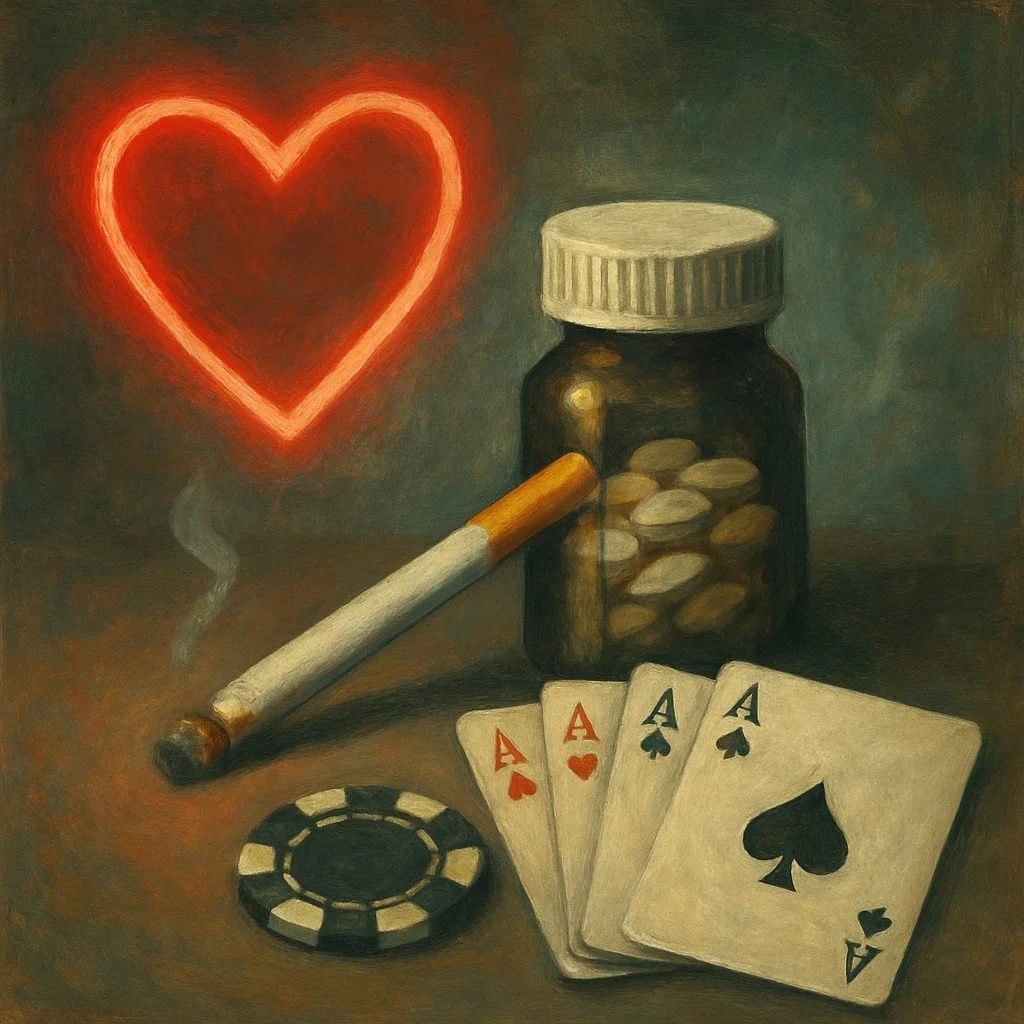
Drug Use in the USA
Drugs, likewise, have a long history of use in American society. During the American Revolution, both Continental and Revolutionary armies used opium to treat sick and wounded soldiers. The high utilization of morphine and opium during the Civil War yielded thousands of addicted veterans, leading to our first true opioid epidemic. Heavy reliance on opioids didn’t only affect veterans, either; by 1895, the typical user was a middle to upper-class white woman with a prescription (sound familiar?). The Gold Rush and ensuing tide of Chinese immigrants to build the cross-country railroad brought with them the opium dens that infested San Francisco. Cocaine was widely used medicinally and surgically, in tonics and cough syrups, and recreationally as a stimulant by laborers — original recipe Coca-Cola did indeed contain actual cocaine! Before the 20th century, narcotics were essentially unregulated and widely available in patent medicines and over-the-counter goods. Concern eventually produced the country's first anti-drug laws: the 1906 Pure Food and Drug Act, the 1909 Smoking Opium Exclusion Act, and the 1914 Harrison Narcotic Act, which respectively required disclosure of addictive ingredients, banned smoking opium, and restricted non-medical opiate use. The same Second Great Awakening that reshaped attitudes toward sex work also fueled Prohibition and the criminalization of marijuana.
Culture and economics have always driven drug use. The 1960s psychedelic counterculture and 1980s cocaine boom were largely youth-driven subcultures tied to music and identity. LSD was classified Schedule 1, but enforcement mostly targeted famous musicians and public disturbances rather than users broadly, and cocaine arrests focused on smuggling, distribution, and manufacturing rather than upper-class users. The crack and methamphetamine epidemics of the 1980s and '90s, by contrast, disproportionately hit poorer communities — urban Black populations and rural working-class white populations, respectively — and both responses emphasized incarcerating users over treatment, even as manufacturers and distributors were also targeted. Black, inner-city men bore the greatest injustice, facing the bulk of crack sentences under a mandatory five-year minimum for possessing just five grams.
The turn of this century brought a tragic opioid epidemic driven by overprescription of pharmaceutical painkillers. A sharp rise in prescribing drugs like OxyContin in the late 1990s, paired with industry research that downplayed addiction risk, fueled a wave of addiction and a dramatic increase in heroin abuse that peaked around 2010, as heroin was cheaper and easier to find. Since then, synthetic fentanyl — cheaper, more potent, and often mixed into heroin or disguised in counterfeit pills — has made the crisis deadlier still, in part because it's so easy to overdose on unknowingly. What began as a largely white, middle- to upper-class prescription problem has since spread across all socioeconomic levels, ages, races, and ethnicities. An estimated 800,000-plus people have died of opioid-related overdoses over the course of this epidemic, including more than 80,000 in 2023 alone. The pharmaceutical industry has faced some recognition and accountability for its role, but clearly too little, too late.
Marijuana has seen the sharpest shift in acceptance, with medical legality in 40 states and full recreational legality in 24 states plus Washington, D.C. — the tide does genuinely seem to be turning on this one. Efforts to decriminalize other drugs, however, face steeper resistance. Proponents argue for shifting the burden of substance abuse away from the criminal justice system and toward public health, so that suffering addicts can get the support and care they need to recover. Opponents point to fears of rising addiction rates and the boost decriminalization might give to black markets.
Gambling
Colonists and immigrants brought many forms of gambling to America: roulette and blackjack from France, baccarat and bingo from Italy, keno from China, craps and horse racing from the UK, and slot machines and poker developed domestically. Early colonies used lotteries to fund infrastructure until the Crown shut that down, and horse racing became an early favorite among Virginia's wealthy landowners. The Second Great Awakening's religious revivals drove gambling underground along with other vices — though New Orleans was able to escape prohibition and became a safe haven for gambling houses, and riverboats, which were exempt when on navigable waterways according to maritime law. The only sport that maintained widespread acceptability under a veneer of prestige was horse racing, with tracks still being closely controlled.
As settlers pushed west, gambling houses sprang up in every new frontier town — Deadwood and Dodge City became famous hubs, along with railway stops like Kansas City and Denver — and San Francisco eventually eclipsed New Orleans as the country's gambling capital. Laws struggled to keep pace with the expansion, chasing much of the activity underground in cities like New York and Chicago, where undercover gambling saloons and off-track betting thrived. The resulting underground networks generated massive profits and fueled powerful mafia operations: New York's Five Families controlled neighborhood bookies, Chicago was ruled by the Policy Kings, and La Cosa Nostra profited handsomely from underground poker and sports betting. When the government cracked down, many mobsters relocated their operations to Nevada, which had legalized gambling during the Great Depression as an economic stimulus; the rest went further underground into backroom poker halls and private sportsbooks. For decades, Nevada and a handful of tightly regulated racetracks scattered around the country were the only legal outlets nationwide.
That began changing in the late 20th century with the rise of tribal casinos and online gambling. The 1987 Supreme Court case California v. Cabazon Band of Indians established tribal sovereign immunity from state gaming bans, formalized by the 1988 Indian Gaming Regulatory Act, which let tribal governments use casinos as an economic development tool. Tribal casinos have since expanded dramatically, now accounting for over 40% of U.S. gaming revenue — more than $40 billion annually. Online poker took off through the internet boom of the 1990s and 2000s, spawning the televised World Poker Tour, and in 2011 the DOJ issued an opinion that the Wire Act of 1961 — originally meant to help states fight organized crime across state lines — applied only to sports betting. That cleared the way for states to legalize poker, bingo, and slots individually and form multi-state partnerships. The 2018 Supreme Court ruling in Murphy v. NCAA then struck down the federal sports-betting ban entirely, triggering an explosion of state-regulated apps like DraftKings, BetMGM, Hard Rock Bet, and FanDuel — though users will notice availability still varies widely by state.
Newer platforms like Kalshi and Polymarket have upended the landscape further. Though they resemble sports betting apps, a federal court precedent classifies them as "financial exchanges" trading event-based derivatives in prediction markets, placing them under the Commodity Futures Trading Commission — the same regulator that oversees exchanges like CME and NYMEX — rather than gambling law. When you place a “bet” with them, you’re trading a derivative, not gambling. It’s largely semantics, but an important one – at least as far as the law is concerned, and perhaps for general society as well. This prediction-market sector has absolutely exploded since its inception, with global trading volumes surpassing $50 billion per month, and even more new brokers looking to get into the game
Morality Tale or Money Grab?
We live in an unarguably capitalist society, and the moral tug-of-war marches on: legislation tries to define what's acceptable while consumer demand determines what's actually available. Our early days as a country saw more wildness and freedom from regulation, later tempered by a pendulum swing toward moderation — yet one of these three vices has become essentially untethered in recent years while the other two remain heavily restricted. Sex, drugs, and gambling combined are estimated to move somewhere between $250 and $400 billion through the economy each year, though so much of it happens off the books that the real figure is hard to pin down. Perhaps the real question isn't morality at all, but who profits from each sector — and who stands to gain most from more or less regulation.
In the sex industry, profit is pushed away from people actually doing the the actual work. Of course the traditional pimp still exists, but in today’s digital world the new pimps taking their cut are tech platforms, credit card companies, and creator platforms that can take up to 30% of any income. Regulatory bias means workers can’t accept payments directly to their own bank accounts or through apps like PayPal or CashApp, leaving them little choice but to use third-party platforms that take a large cut. Regulations addressing trafficking and coercion is essential, but using it as cover to avoid genuine worker protections is disingenuous.
Nationwide, nearly one in five incarcerated people is locked up for a drug offense. The reasons behind past legislative crackdowns, corporate-driven epidemics, and the over-incarceration of addicts are complicated and debated, but the record profits still earned by pharmaceutical corporations and the dramatically biased imprisonment rates for minorities are not. The private prison industry generates around $5 billion a year nationwide, plus roughly $11 billion in economic output from prison labor. For-profit prison lobbyists donate tens of millions annually to state and federal campaigns — with Florida and California among the largest recipients — and most government contracts guarantee prisons a minimum occupancy level. It would be naïve to ignore the economic and political interests invested in maintaining the status quo here.
The explosion of the gambling industry, both for states and tribes, has been an economic boon. Huge revenues are generated in direct gaming income, taxes, and lotteries. Online and live poker rooms are crammed with participants. Sportsbooks are signing lucrative deals with major leagues, making sports viewership more popular than ever. Nearly everyone seems to be making money hand over fist — except, perhaps, the everyday gambler. The rise of predictive betting has opened an entirely new, wild-west frontier of wagering on daily life, the long-term impact of which is hard to predict. The money, however, keeps flowing in massive amounts, usually into the hands of platform operators or those with select inside information.
At the end of the day, we can preach all we like. Teaching families about values and morality has always mattered, and the best lessons happen at home, among people we trust. But on a societal and cultural level, the cynical view is that following the money usually leads to the real answer. Whoever has the most to gain usually fights the hardest for it.