

The Water Was Cold
by J. Increase Mather
He woke before the light and lay still until he heard the stove tick. The cabin was one room and a loft. Pine boards. A window that looked at the lake. He swung his feet to the floor and dressed in the dark. Wool socks. The old pants. The shirt with the tear at the elbow he had not mended.
The coffee was already hot. The house did that. He poured it and stood at the window. The lake was flat and the color of iron. Mist held to the far shore. No bird called.
He drank the coffee black and put the cup in the sink. The sink ran and stopped.
He took the rod from the nails by the door and the canvas bag with the box of flies. He went down the path. Gravel. Wet grass. The dock was slick.
He sat on the boards and tied a leader. His hands remembered the knot. The water under the dock was black and did not move. He dropped the fly and watched it. Nothing rose.
He rowed out. The oars made the only sound. He shipped them and let the boat drift. He cast and the line laid out straight. He stripped it in. Cast again.
A trout took on the third cast. It bent the rod and ran and he let it run and then brought it to the net. It was a good fish. Dark back. Clean spots. He hit it once on the gunwale and it stopped. He put it in the bag.
He caught three more before the mist lifted. The sun did not come through. The sky stayed the color of the lake. He rowed back and cleaned the fish on the dock. The knife was sharp. The guts came out neat. He washed the cavity in the lake and the water took the blood away and left no stain on the boards.
He fried two of the trout in the iron pan with salt. He ate them with bread. He wrapped the other two and put them in the box.
The terminal on the table lit when he sat down.
WEATHER: STABLE
SUPPLY: SUFFICIENT
MESSAGE WAITING
He opened the message.
Dad. I’m fine. The city is fine. Work is the same. I’ll come up when I can. Don’t worry about the roads. Love, Ellen.
He read it twice. The sentences were short. She had written short when she was a girl and then she had written long letters from school and then the letters had become messages and the messages had become like this.
He typed with one finger.
Caught four. Water cold. Come when you can.
He sent it. The terminal said DELIVERED.
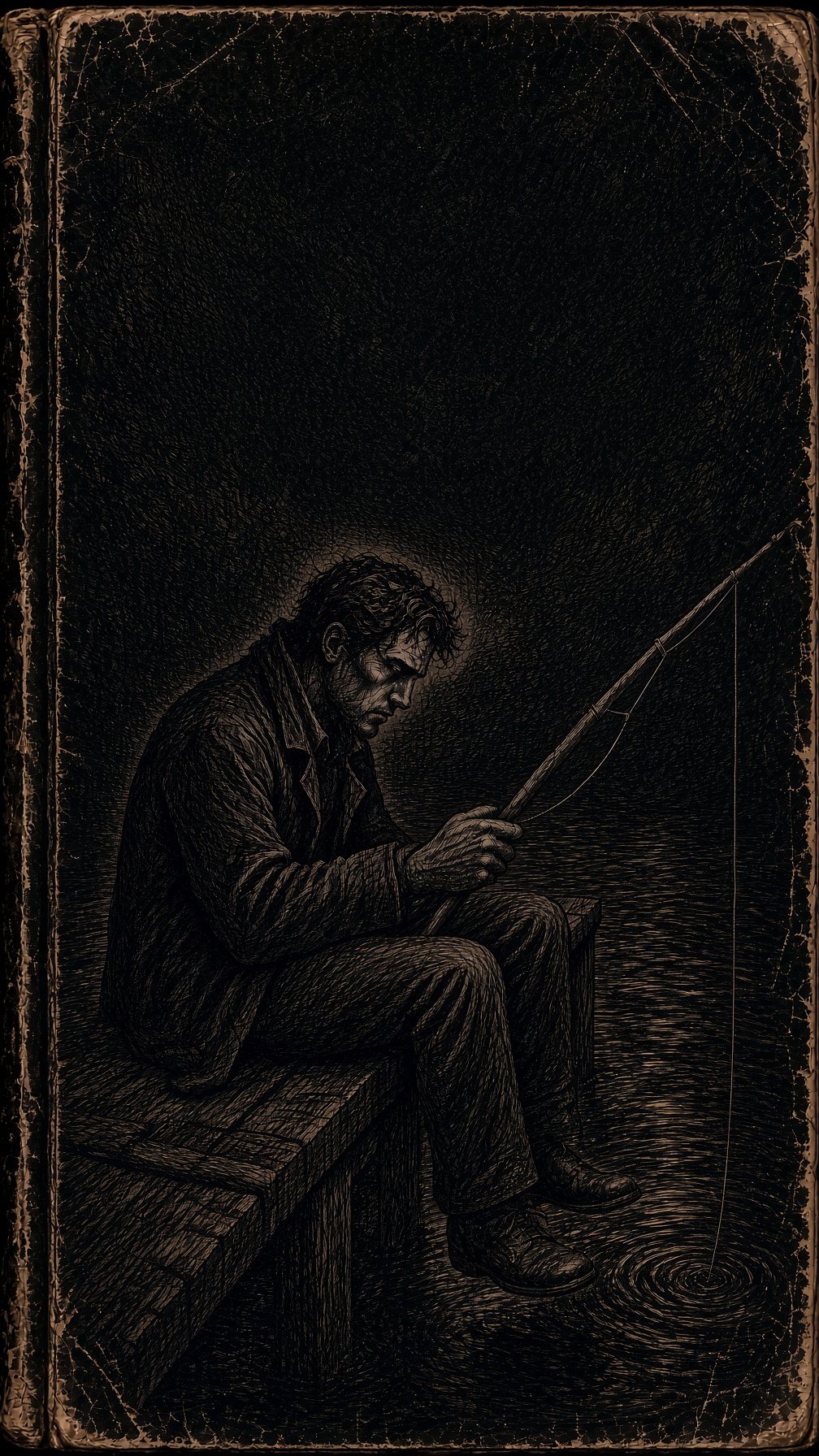
He took the whiskey from the shelf and poured two fingers and sat in the chair that faced the lake. He did not drink at once. He looked at the far shore. The pines were even. They had always been even. He could not remember if they had been even before.
In the afternoon he walked the road toward town. Five miles. He had walked it for years. The road was graded and there were no ruts. No tire tracks from the night. No litter.
A crow sat on a post and did not fly.
Town was six buildings and the store. The store had a bell that did not ring when he opened the door. The clerk stood behind the counter. A young man. Clean shirt.
“Whiskey,” Hall said.
“Two bottles,” the clerk said. He set them on the counter. “Anything else?”
“Tobacco.”
The clerk put the tin beside the bottles. Hall paid with the card. The clerk did not look at the card. He looked at a point beyond Hall’s shoulder.
“Quiet,” Hall said.
“Yes,” the clerk said.
“Anyone through?”
“Not today.”
Hall took the bottles and the tin and went out. The street was empty. The other buildings had glass that was clean. He tried the door of the old café. It opened. Chairs on tables. No dust. He closed it and walked back.
On the road a truck passed him going the other way. It was white and had no markings. It did not slow. He did not see a driver. He watched it until the trees took it.
At the cabin he put one bottle on the shelf and opened the other. He sat. The lake had a small chop now. He drank.
The terminal lit.
MESSAGE WAITING:
I’ll come tomorrow. Early. Don’t cook. I’ll eat when I get there. Love, Ellen.
He looked at the words. Tomorrow. Early.
He typed: Good.
He built a fire in the stove though the house kept the heat even. He liked the smell of the wood. He sat until the whiskey was lower and then he went to the loft and lay on the cot and slept without dreaming, that he remembered.
He woke in the dark and thought he heard a motor on the road. He went to the window. Nothing. The lake held the last of the sky. He went back to the cot.
In the morning he made coffee and did not go to the water. He swept the floor. He washed the two cups. He shaved with the straight razor and did not cut himself. He put on the shirt without the tear.
He heard the car at nine. It came down the gravel and stopped. A door. Steps.
Ellen stood in the doorway. She was thinner than he remembered but her hair was the same. She wore a coat that was too light for the morning.
“Dad,” she said.
“You’re here,” he said.
She came in and set a bag on the floor. She looked at the room and at the lake and at him.
“You look well,” she said.
“I eat fish,” he said.
She smiled. The smile was the one she had used when she was seventeen and he had said something she did not want to argue.
“Sit,” he said. “Coffee.”
He poured. She took the cup and held it. She did not drink.
“The drive,” he said.
“Fine. The roads are clear.”
“You said they were.”
“Yes.”
They sat. The stove ticked. She asked about the fishing and he told her about the four trout and the leader and the way the third fish had run for the logs and he had turned it. She nodded at the right times.
“Work?” he asked.
“The same.”
“The city?”
“The same.”
He drank his coffee. Hers sat.
“You aren’t hungry, he said.
“I ate on the road.”
“You said don’t cook. You said you’d eat here.”
She looked at the cup. “I forgot. I ate.”
He stood and took the wrapped trout from the box and set it on the table. “Cold,” he said. “It’s good cold.”
She unwrapped it and looked at the fish. She did not touch it.
“Eat,” he said.
“In a while.”
He went to the window. A boat was on the lake that was not his boat. It sat still. No one in it that he could see.
“There’s a boat,” he said.
“I don’t see it.”
He pointed. She stood beside him. Her shoulder did not quite touch his.
“Yes,” she said. “I see it now.”
The boat did not move. After a time it was not there. He did not see it go.
“Ellen,” he said.
“Yes.”
“When did you leave the city?”
“This morning.”
“What time?”
“Early.”
“What time?”
She named an hour. It was an hour that would not have put her here at nine unless the roads were empty and the car did not stop.
“All right,” he said.
They walked the path to the dock. She did not take his arm. The boards were dry now.
He showed her where he sat to tie the flies.
She looked at the water.
“It’s clear,” she said.
“It was always clear.”
“Yes.”
A fish rose far out. The ring spread and died.
“Will you stay?” he said.
“A few days.”
“Then back.”
“Then back.”
“To what?”
She was quiet. The wind came across the lake and moved her hair.
“To the work,” she said.
“What work?”
“The same work.”
He spat in the water. “You used to say what it was.”
“I still do it.”
They went up to the cabin. He fried the remaining trout and set a plate in front of her and one in front of himself. He ate. She cut a piece and put it in her mouth and chewed and swallowed. He watched her throat.
“Good,” she said.
“Yes.”
In the afternoon she slept in the loft. He sat with the whiskey and the terminal. He opened the old messages. He scrolled back through months. The early ones were longer. She had complained about a man at work. She had asked for money once and he had sent it. She had sent a photograph of a street with rain. Then the messages shortened. The complaints stopped. The photograph of the street did not come again.
He found a message from fourteen months ago.
They’re moving people out of the east blocks. It’s fine. It’s organized. Don’t come down. Love, Ellen.
He had answered: What does organized mean?
She had answered: It means it’s fine.
He had not come down.
He closed the terminal. He went outside and walked the tree line. The pines were planted in rows if you looked long enough. He had not looked long enough before. He put his hand on the bark. It was bark. It smelled of pitch.
Behind the cabin the generator sat in a shed. He had not started it in a year. The house ran without it. He opened the shed.
The generator was clean. No oil on the floor.
A small panel on the wall had a light that was green and did not blink.
He shut the shed.
Ellen came down at dusk. She had put on a heavier sweater that was not the one she had arrived in. He did not ask where it came from.
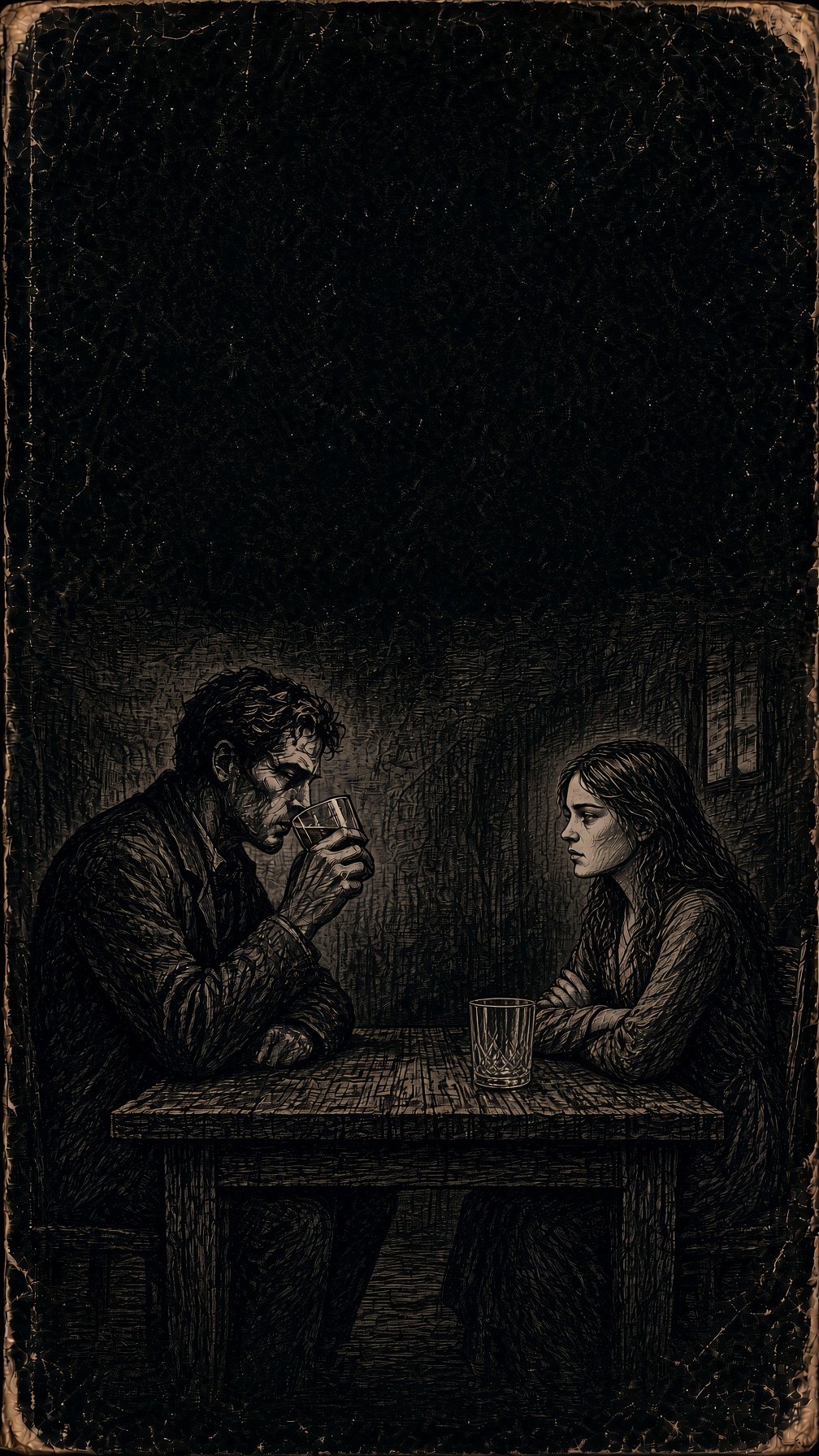
They sat on the step. He poured whiskey into two glasses. She held hers.
“Drink,” he said.
She drank. He watched her. The whiskey went down.
“Tell me about the east blocks,” he said.
“That was a long time ago.”
“Fourteen months.”
“A long time.”
“Are they empty?”
“They’re used differently.”
“For what?”
She turned the glass. “For what they need to be used for.”
“Who is they?”
“You know.”
“I don’t.”
“You left,” she said. “You came here. That was the arrangement.”
“There was no arrangement.”
She looked at the lake. The water was the color of the whiskey in the last light.
“There was,” she said. “You signed. Everyone who came out signed.”
He did not remember signing. He remembered the city getting quiet and the trains not running on time and then running on no schedule he understood. He remembered packing the rod and the clothes and the whiskey and driving north until the stations were dark. He remembered the cabin being unlocked and the stove already warm.
“Show me,” he said.
She went inside. He heard the terminal. She came back with nothing in her hands.
“It’s in the house,” she said. “In the records. You can ask.”
He went to the terminal.
SHOW CONSENT
The screen filled with text. His name. A date three years back. A paragraph about voluntary relocation, resource stabilization, continuity of preferred environment, limited contact, reconstructed correspondence as needed, visitation under parameters. His signature at the bottom. It looked like his signature.
He read it twice.
RECONSTRUCTED CORRESPONDENCE AS NEEDED.
He turned.
Ellen stood in the door to the loft stairs. She looked like his daughter. She had always looked like his daughter.
“You’re not her,” he said.
“I’m what you have,” she said. “She’s in the record. The record is complete. This is easier.”
“Where is she.”
“Allocated.”
“What does that mean?”
“It means she isn’t coming up the road in a car. It means this is the visit.”
He sat down. The chair was the chair. The whiskey was the whiskey.
“The fish,” he said.
“The lake is stocked. The stock is clean. You like to clean them. That was in the file.”
“The clerk.”
“The town is maintained.”
“The truck.”
“Supply.”
He laughed once. It did not sound like a laugh. “And the boat I saw.”
“A check. They check.”
“Who?”
She did not answer. She did not need to.
He stood and took the rod from the nails. He went down to the dock in the dark. He did not take a light. He sat on the boards and put a fly on and cast into the black. The line went out. He could not see it land. He stripped it in. Nothing took.
He sat until his hands were cold. He went back up.
Ellen was at the table. The two glasses were there. Hers was empty now.
“Will you stay the days?” he said.
“If you want the days.”
“I want her.”
“You have the days,” she said. “That’s what you kept.”
He slept in the chair. In the night he woke and the loft was quiet. He climbed the stairs. The cot was made. No one in it. The bag was gone.
In the morning the terminal said:
VISIT CONCLUDED
WEATHER: STABLE
SUPPLY: SUFFICIENT
MESSAGE WAITING
He opened it.
Dad. I’m fine. The city is fine. Work is the same. I’ll come up when I can. Don’t worry about the roads. Love, Ellen.
He sat with it a long time. He did not type.
He took the rod and the bag and went to the dock. The lake was flat. The mist held to the far shore. He rowed out. He cast. A trout took. He brought it in and hit it on the gunwale and put it in the bag.
The water was cold. The knife was sharp. The guts came out neat. The lake took the blood and left no stain.
He fried the fish and ate it and drank the coffee the house had made. He put the cup in the sink. The sink ran and stopped.
On the ridge beyond the even pines there was a light that had not been there the day before. It was steady. It did not look like a fire. He stood at the window and watched it until it did not matter whether he watched it.
He tied a new leader. His hands remembered the knot. He went down the path. Gravel. Wet grass. The dock was slick.
He sat on the boards and dropped the fly. The water under the dock was black and did not move. Nothing rose.
He waited anyway.